
Transition to Digital Narcotic Logs: Mitigating Regulatory and Patient Safety Risks in the ASC
Introduction: The Fragility of Paper Logs
As DEA oversight intensifies, the historical reliance on paper narcotic logs in ASCs has shifted from a clinical habit to a significant institutional liability. The transition to digital systems is no longer a matter of administrative preference; it is a strategic mandate for a Center’s Risk Management Policies.
The vulnerabilities of manual documentation are not merely administrative, but also clinical. Data indicate that up to 10–15% of healthcare professionals will misuse substances during their careers. A Mayo Clinic Proceedings review found that nearly 30,000 patients were potentially exposed to bloodborne pathogens and targeted for notification and testing in healthcare-associated drug-diversion outbreaks.
Paper logs illegibility combined with a lack of real-time accountability act as a veil for these risks. In an era where "drug diversion prevention in ASCs" has become a focus of regulatory bodies, continuing to use manual systems poses many issues. The most effective way to appreciate this risk is to examine the specific points where traditional systems have failed.
The Regulatory Framework and the "Audit-Ready" Standard
DEA regulations require applicable registrants to maintain current, complete and accurate records of controlled substances received, delivered, administered or otherwise disposed of, with required records generally retained for at least two years. A complete digital audit trail offers higher continuous auditable Compliance for an ASC.
Non-Negotiable Compliance Elements for Electronic Systems:
-
Serialized Entry Architecture: Every transaction must create a secure, serialized record that prevents backdating or deletions.
-
Dual-User Verification: Secure digital signatures for both the primary user and a witness, authenticated at the point of access.
-
Real-Time Reconciliation Reports: The ability to generate "Board-of-Pharmacy-ready reconciliation summaries" and "Daily Tally reports" without manual spreadsheets.
-
Immutable Metadata: Capturing exact timestamps, IP addresses, and user identification for every modification.
The shift from "reactive" auditing—reviewing logs months after a discrepancy—to "proactive" monitoring fundamentally alters the facility's risk profile. Real-time visibility allows a Director of Nursing (DON) or Administrator to identify anomalies before they escalate into reportable incidents.
Case Study 1: The $125,000 Penalty of "Batch Signing" (Iowa ASC)
A recurring failure point in an ASC’s narcotics documentation is the practice of "batch signing," where clinicians sign controlled substance records after the fact rather than contemporaneously. In a widely publicized Iowa enforcement action, the U.S. Department of Justice alleged that employees batch signed fentanyl waste records without actually witnessing the wasting process. During the same period, a registered nurse diverted fentanyl by withdrawing the drug, replacing it with saline, and returning the tampered vials to inventory. The ASC ultimately had to pay $125,000 to resolve allegations that it failed to maintain complete and accurate controlled substance records and failed to implement effective controls against theft and diversion.
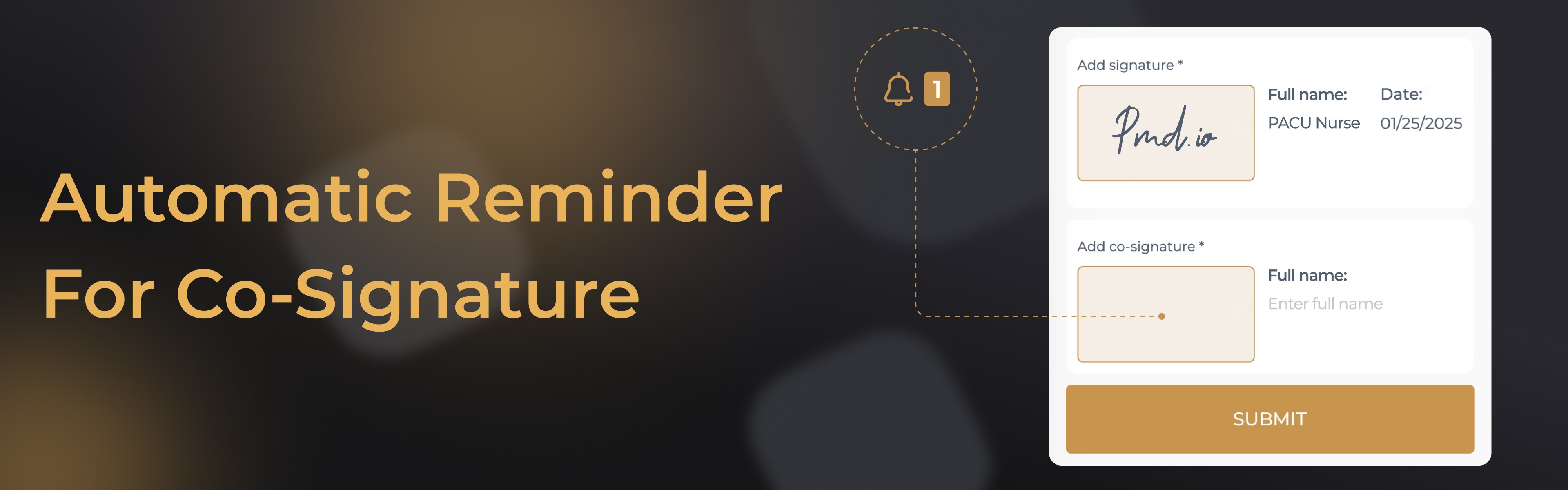
PreferredMD’s electronic controlled substance log software eliminates this loophole through digital dual-verification. Unlike paper, where signatures can be falsified or backdated, a digital system requires a co-signer at the moment of dispensing. Because entries are serialized and linked to specific IP addresses, the system creates a "hard stop" against retroactive corrections. This automated oversight ensures that the count in the cabinet always matches the digital record, preventing any administrative gaps.
Case Study 2: Detecting the "Invisible" Diverter (The Anesthesiologist Saline Swap)
Intentional diversion often utilizes sophisticated substitution. In one forensic investigation, a provider replaced fentanyl vials with saline, leading to PACU patients reporting 10/10 pain despite documented high-dose opioid administration. Beyond the failure of pain management, this introduces severe infectious risks. Diverters have even caused outbreaks of Achromobacter xylosoxidans and Serratia marcescens bacteremia by introducing contaminants into medication vials during the swap.
Digital systems provide the "Connective Tissue" between the pharmacy cabinet and the Operating Room. By generating a dedicated Anesthesia Digital Controlled Substance Log that links back to the main PACU log, administrators can monitor specific usage patterns for providers in real-time. Automated variance calculations highlight discrepancies between what was dispensed, and what was wasted or returned. This eliminates the "data silo" between the OR and the pharmacy, helping to catch a possible "invisible" diverter instantly rather than months later.

Case Study 3: Mitigating Risks of Contracted and Inconsistent Staffing
Ambulatory environments are characterized by a fast-paced nature and, frequently, the use of contracted or inconsistent staff. This operational reality, combined with "manual auditing" of paper charts, creates a fertile ground for selection and transcription errors. In such an environment, there is increased risk of a clinician administering the wrong controlled substance.
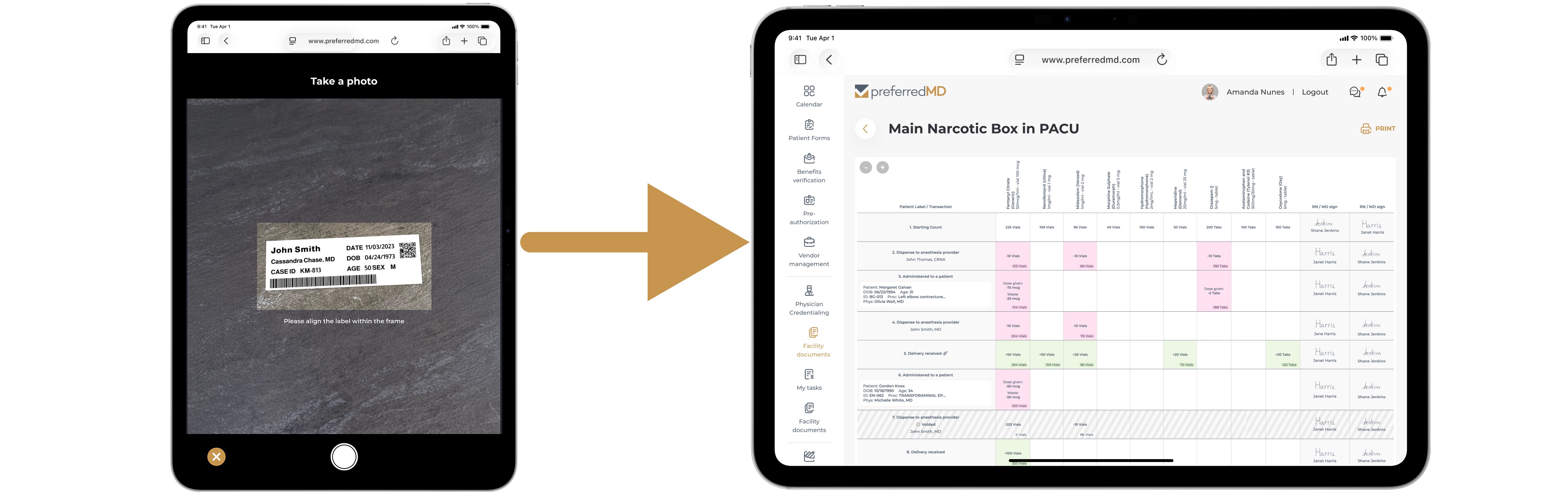
Electronic systems act as a "clinical safety net" by enforcing narcotic reconciliation through point-of-care validation. By requiring the scanning of a patient label and the medication’s QR or barcode, the system forces a mandatory reconciliation. This "Scan-Count-Sign-Done" workflow ensures that the system automatically verifies the patient’s identity and the medication against the order. This safeguard prevents a transcription error from reaching the patient, providing a level of validation that manual paper charting can never match.
The Architectural Standard: Functional Requirements for Modern ASCs
For a digital system to be effective, it must be cabinet-agnostic. Implementing high-level compliance should not require a $50.000-$100,000 capital expenditure for new hardware. The goal is to integrate smart technology into existing workflows.
Vulnerability vs. Digital Safeguard
| Vulnerability | Digital Solution |
| Illegible handwriting & missing signatures | Secure digital entry with mandatory co-signer fields. |
| Manual math & tally errors | Automatic variance calculations with no spreadsheets. |
| Lost or altered packing slips | Photo-upload of delivery docs securely embedded into the log. |
| Backdated or falsified entries | Automatic timestamps, IP tracking, and geolocation. |
| Data silos between OR and PACU | Integrated Anesthesia Logs linked to the main inventory. |
| Audit-readiness delay | Instant generation of Board-of-Pharmacy-ready reports. |
This architecture provides a centralized dashboard that allows a Director of Nursing to monitor all facility activity remotely. From seeing which entries remain open to tracking live inventory, the dashboard ensures total oversight of the chain of custody.
Conclusion: Elevating the Standard of Care and Compliance
In 2026, narcotic paper logs have become a liability, and modern ASCs now have a choice to transition to a secure and budget-conscious digital system that protects patients, providers, and a facility’s license.
Critical Takeaways for ASC Leadership:
-
Eliminate Batch Signing: Enforce point-of-care, dual-verification with serialized digital logs to ensure real-time accountability.
-
Bridge the OR Gap: Implement dedicated anesthesia logs that sync with the main cabinet to eliminate documentation "blind spots."
-
Automate Reconciliation: Utilize QR/barcode scanning and automated reporting to eliminate manual math and transcription errors.
Adopting a platform like PreferredMD allows your facility to achieve the "Scan-Count-Sign-Done" workflow. By utilizing a system designed by practicing anesthesiologists to work with your existing cabinets, you ensure that your facility remains audit-ready and patient-safe. Elevating your facility’s standard for drug diversion prevention in ASCs is not just about technology—it is about clinical excellence and institutional integrity.
Written by Dr. Joseph Sebeo